0
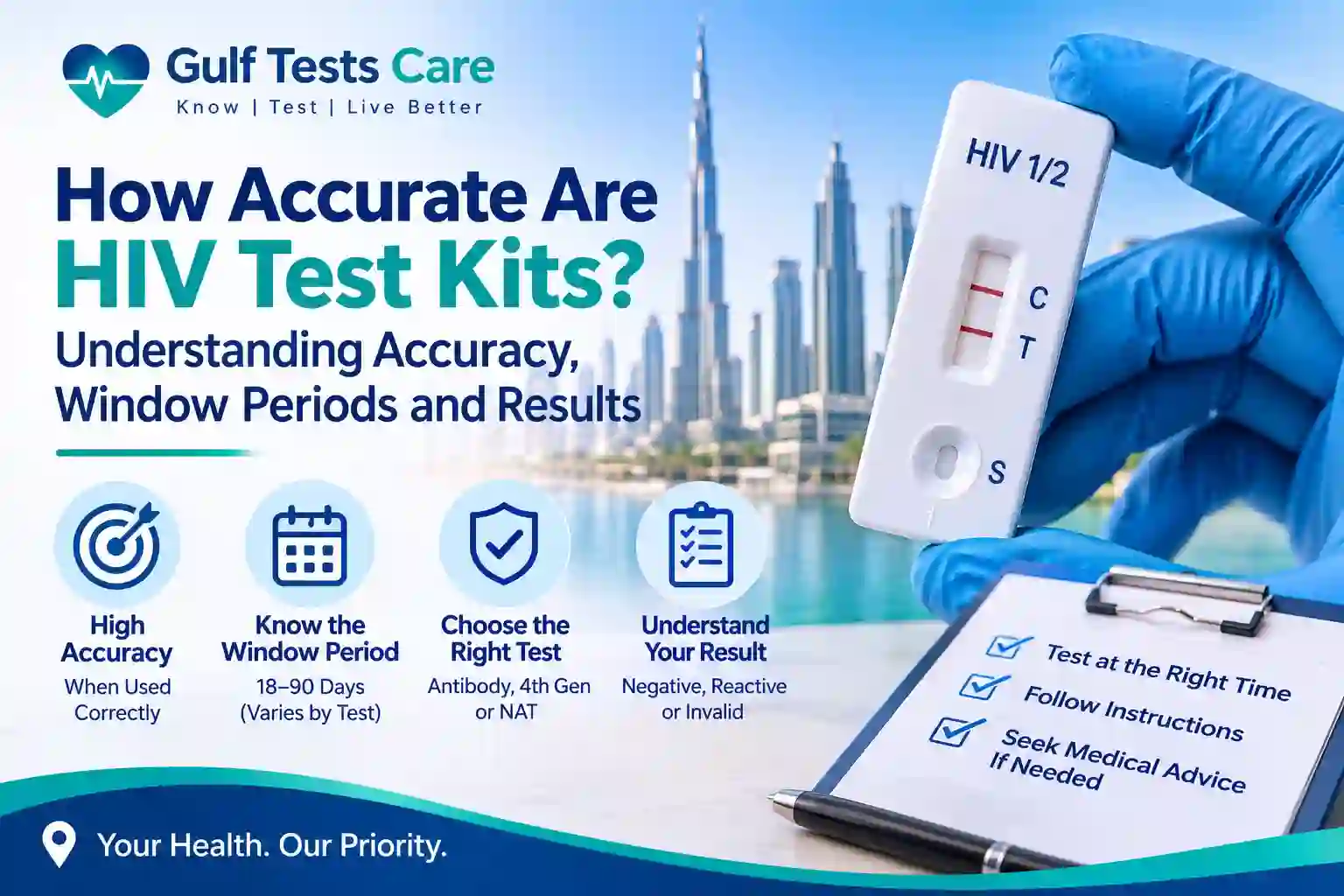
Choosing an HIV test kit is an important decision. Whether you are researching testing options in Dubai or comparing different types of HIV tests, one question often comes first: How accurate are HIV test kits?
Modern HIV tests are designed to detect HIV reliably when they are used correctly and at the appropriate time. However, no test can detect HIV immediately after exposure. The type of test, the time since a possible exposure, the sample used and following the manufacturer's instructions all matter.
This guide explains what affects HIV test accuracy, how different tests compare, how to understand your result and when to seek follow-up testing.
HIV tests are generally reliable when they are quality-assured, stored correctly, used according to their instructions and performed after the relevant detection window.
However, there is no single accuracy percentage that applies to every HIV test kit. Different products use different technologies and samples, and their performance can vary.
When comparing a test, look for:
The type of HIV test: antibody, antigen/antibody or nucleic acid test
The sample required, such as finger-prick blood, venous blood or oral fluid
The manufacturer's stated performance information
The test's detection window
Storage conditions and expiry date
Whether the product is intended for professional use or approved for self-testing
A test that is highly reliable when used at the right time may still produce a negative result if it is taken too early.
The window period is the time between a possible HIV exposure and the point when a particular test can reliably detect infection.
A person may have HIV but receive a negative result if testing takes place before the test can detect it. This is why the timing of testing is just as important as the test itself.
The US Centers for Disease Control and Prevention (CDC) provides the following usual detection windows:
| HIV test type | Usual detection window after exposure |
|---|---|
| Nucleic acid test (NAT) | 10–33 days |
| Laboratory antigen/antibody test using venous blood | 18–45 days |
| Rapid antigen/antibody test using finger-prick blood | 18–90 days |
| Antibody test, including most self-tests | 23–90 days |
These are general ranges, not guarantees for every product or person. Always check the instructions for the specific test you are using.
If you receive a negative result before the full window period has passed, repeat testing after the relevant window period. A healthcare professional can advise you on the appropriate test and timing.
Different HIV tests look for different markers of infection. Understanding these differences can help you choose an appropriate testing route.
Antibody tests detect the antibodies the immune system produces in response to HIV.
Many rapid HIV tests and self-tests are antibody tests. Depending on the product, they may use a finger-prick blood sample or oral fluid.
They can be convenient, but antibody tests generally have a longer window period than laboratory antigen/antibody tests.
Fourth-generation HIV tests look for both:
HIV-1/2 antibodies
The p24 antigen, a protein associated with HIV
Laboratory fourth-generation tests using blood drawn from a vein generally have a detection window of 18–45 days.
Some rapid antigen/antibody tests use finger-prick blood and have a different window period. Do not assume that every fourth-generation test has the same performance or detection window. Check the exact product instructions and sample type.
NAT tests look for HIV genetic material in the blood. They can generally detect HIV earlier than antibody tests and are sometimes considered when recent exposure or acute infection is suspected.
A healthcare professional can advise whether this test is appropriate.
Even a quality-assured test can be affected by how and when it is used.
Testing too early: This is one of the most important reasons a negative result may not rule out infection. The test may have been taken before the end of its detection window.
Incorrect sample collection: Using the wrong sample type or collecting an insufficient sample can affect the result. Follow the product's sample-collection instructions carefully.
Incorrect procedure: Skipping steps, using the wrong amount of sample or failing to add the required buffer can make a test invalid or unreliable.
Reading the result too early or too late: Read the result only within the time range specified by the manufacturer. Changes outside that period should not be interpreted as a valid result.
Expired or incorrectly stored kits: Heat, humidity, damaged packaging and expiry can affect test performance. Check the expiry date and storage instructions before use.
Antiretroviral medicines: PEP or PrEP may affect the timing and interpretation of HIV testing. If you have used either, tell your healthcare professional so they can advise on the appropriate testing schedule.
A non-reactive or negative result means the test did not detect the markers it is designed to identify in the sample.
However, its meaning depends on when you tested.
After the full window period: A negative result is reassuring if there has been no further potential exposure and the test was used correctly.
Before the full window period: The result may be too early to rule out HIV. Repeat testing may be needed.
After another possible exposure: The testing timeline may need to be recalculated from the most recent exposure.
If you are unsure whether your result is conclusive, speak with a qualified healthcare professional.
A reactive screening result does not, by itself, establish an HIV diagnosis.
If a rapid test or self-test gives a reactive result:
Do not assume that the result is a confirmed diagnosis.
Arrange follow-up testing with a qualified healthcare provider or testing service as soon as possible.
Follow the recommended diagnostic testing process.
Discuss any recent exposure, symptoms or use of PEP or PrEP with the healthcare professional.
Follow-up testing is essential because an initial screening test can sometimes be reactive when a person does not have HIV.
If you are comparing HIV test kits in Dubai, do not choose a product based only on its price, advertised speed or the words "rapid test."
Check the following details before making a decision:
Test technology: Is it an antibody test or an antigen/antibody combination test?
Sample type: Does it require finger-prick blood, venous blood or another sample?
Intended use: Is it designed for professional use, or does the manufacturer explicitly identify it as a self-test?
Detection window: Does the product information explain when it can detect HIV?
Instructions: Are clear instructions and result-reading guidance supplied?
Quality information: Is the manufacturer and relevant product performance information available?
Storage and expiry: Can the kit be stored within the specified conditions, and is it within its expiry date?
For people comparing product specifications, you can review the HIV Ab/Ag 4th Generation Rapid Test from Gulf Tests Care. Check the manufacturer's instructions and intended-use information before deciding whether it is suitable for your testing needs. A product described as a rapid test should not automatically be assumed to be suitable for home self-testing.
You can also browse the Gulf Tests Care product range.
If you think you may have been exposed to HIV recently, do not wait for a home test to become reliable before seeking advice.
Post-exposure prophylaxis (PEP) is medication that may help prevent HIV after a possible exposure. It must be started as soon as possible and no later than 72 hours after exposure. Contact an emergency department or qualified healthcare provider immediately to discuss whether PEP is appropriate.
A healthcare professional can also recommend the right initial and follow-up tests based on the timing of the exposure and any medicines you have taken.
Rapid HIV tests can be reliable when they are quality-assured, used correctly and taken after the appropriate detection window. Their performance and detection windows vary by product and sample type.
Yes. Testing during the window period can produce a negative result because the test may not yet detect the infection. Repeat testing after the relevant window period may be necessary.
Fourth-generation tests detect both HIV antibodies and the p24 antigen. Laboratory fourth-generation tests can generally detect infection earlier than antibody-only tests. The exact detection window depends on whether the test is laboratory-based or rapid and on the sample used.
No. A reactive self-test is a preliminary result and must be followed by testing through a qualified healthcare provider using the recommended diagnostic process.
No. Not every rapid HIV test is designed or approved for self-testing. Check the manufacturer's intended-use instructions before using a product at home.
The answer depends on the test type, the time since possible exposure and whether there have been further exposures or use of PEP or PrEP. Follow the specific product instructions and seek professional advice if you are unsure.
HIV test kits can provide valuable information, but accuracy depends on more than the test itself. Choosing the correct test, understanding its detection window, following the instructions and arranging follow-up when needed are all essential.
If you are researching an HIV test kit in Dubai, compare the product's intended use, sample type and manufacturer information before choosing. When in doubt, consult a qualified healthcare professional about the most appropriate testing option.
Medical note: This article is for general educational purposes and is not a substitute for medical advice, diagnosis or treatment. A reactive screening result requires follow-up testing. A negative result taken during the window period may need to be repeated.
Order your discreet test kit today with fast delivery across the UAE.
Shop Now