0
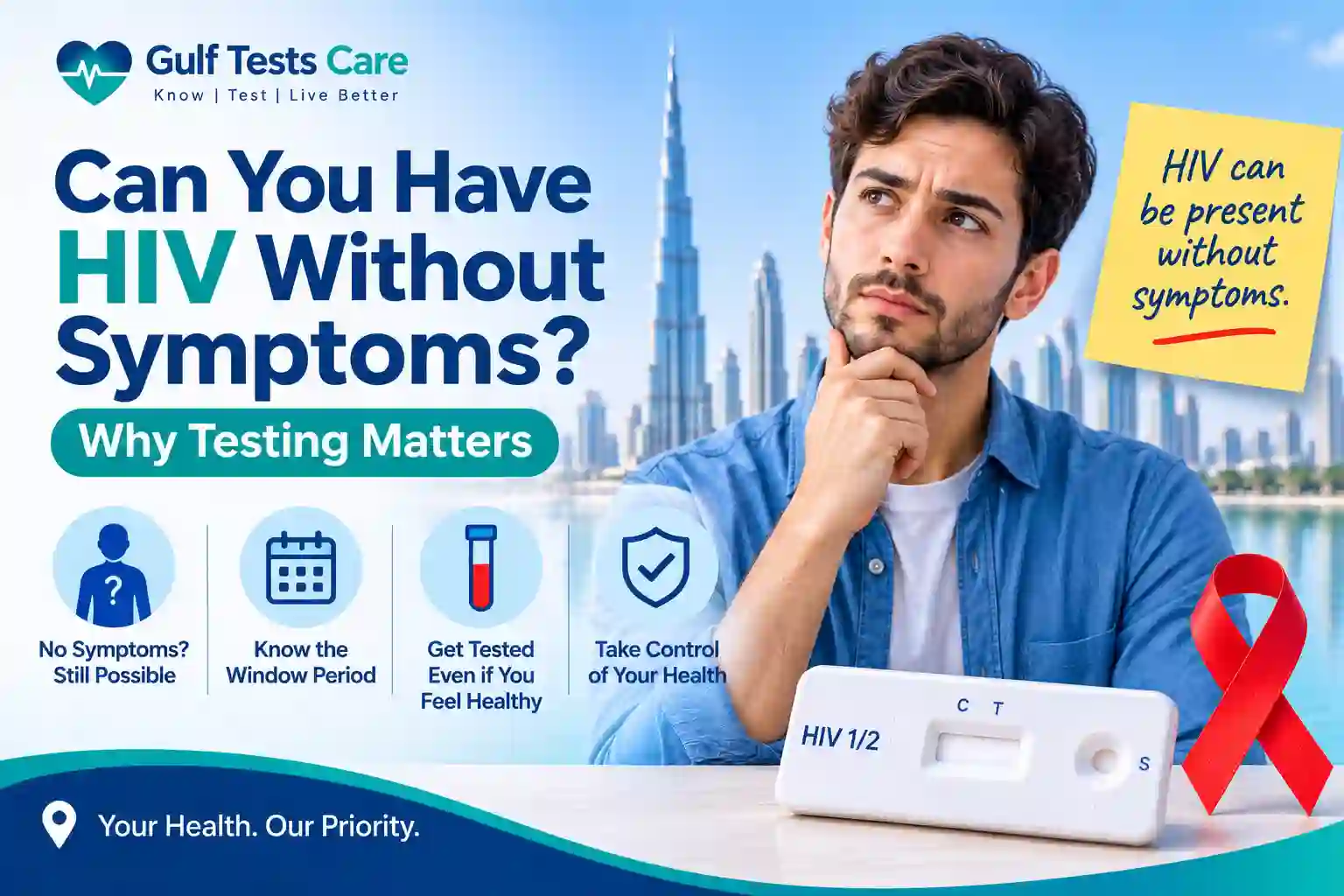
Many people associate HIV with noticeable symptoms such as fever, tiredness, skin rashes or swollen lymph nodes. However, HIV does not always cause obvious symptoms. Some people may have HIV for years without feeling unwell.
This is one reason why HIV testing is important, even when you feel healthy.
If you are researching an HIV test kit in Dubai, understanding the relationship between HIV symptoms, testing and detection windows can help you make informed decisions.
In this guide, we explain whether HIV can be present without symptoms, what early signs may look like, when to get tested and how to understand your results.
Yes. A person can have HIV without experiencing noticeable symptoms.
Some people develop flu-like symptoms during the early stage of infection, while others experience no symptoms at all.
After the initial stage, HIV can enter a chronic phase in which the virus remains active in the body but the person may feel completely healthy.
This means:
Feeling healthy does not prove that you are HIV-negative.
Having no symptoms does not rule out HIV.
Symptoms alone cannot confirm an HIV infection.
Testing is the only reliable way to know your HIV status.
According to the CDC, some people with chronic HIV infection may have no symptoms for many years. Testing helps identify infection before symptoms develop.
When symptoms occur during early HIV infection, they often resemble those of common viral illnesses.
Early symptoms may include:
Fever
Sore throat
Skin rash
Headache
Muscle aches
Chills
Night sweats
Fatigue
Swollen lymph nodes
Mouth ulcers
These symptoms may appear around two to four weeks after infection, although not everyone experiences them.
Important: These symptoms are not specific to HIV. Influenza, other viral infections and many unrelated conditions can cause similar symptoms.
You should not use a symptom checklist to diagnose yourself or decide that you do not need testing.
Yes. After the early stage, HIV may enter what is known as the chronic or asymptomatic stage.
During this stage:
A person may feel healthy.
The virus remains active in the body.
The immune system may gradually be affected without treatment.
The person may not notice any obvious physical changes.
This stage can last for many years without treatment, although the duration varies between individuals.
HIV treatment can control the virus and help people live long, healthy lives. People who take treatment as prescribed and maintain an undetectable viral load do not transmit HIV through sex.
Early diagnosis is important because treatment can begin before serious immune-system damage occurs.
Symptoms are not a dependable way to determine HIV status.
For example, consider two situations:
Situation A: Someone has fever, fatigue and a sore throat after a possible exposure. These symptoms could have many causes and do not establish an HIV diagnosis.
Situation B: Someone feels completely healthy after a possible exposure. The absence of symptoms does not rule out HIV.
In both situations, appropriate testing is more useful than relying on how the person feels.
Testing can help you:
Understand your HIV status.
Access treatment early if a diagnosis is confirmed.
Make informed decisions about prevention.
Protect your long-term health.
Discuss appropriate testing and prevention with a healthcare professional.
The right time to test depends on the type of test and how long it has been since the possible exposure.
Every HIV test has a window period. This is the time between exposure and the point when the test can reliably detect infection.
The CDC gives the following usual detection windows:
| HIV test type | Usual detection window |
|---|---|
| Nucleic acid test (NAT) | 10–33 days |
| Laboratory antigen/antibody test using venous blood | 18–45 days |
| Rapid antigen/antibody test using finger-prick blood | 18–90 days |
| Antibody test, including most self-tests | 23–90 days |
These are general ranges. The exact window period depends on the test and sample type.
If you test negative before the full window period has passed, you may need another test after that period. Follow the instructions for your specific test and seek professional advice if you are unsure.
There are several types of HIV tests. Understanding the differences can help you discuss suitable testing with a healthcare professional.
These tests detect antibodies produced by the immune system in response to HIV.
Many rapid tests and self-tests are antibody tests. Depending on the product, they may use blood or oral fluid.
They can be convenient, but their detection window is generally longer than that of laboratory antigen/antibody tests.
Click here to see Antibody HIV Self Test Kit
Fourth-generation tests detect both HIV antibodies and the p24 antigen.
Laboratory fourth-generation tests using blood from a vein generally have a detection window of 18–45 days.
Rapid antigen/antibody tests using finger-prick blood have a different window period, so it is important to check the exact product instructions.
NAT tests look for HIV genetic material in the blood. They can detect infection earlier than many antibody-based tests.
A healthcare professional may recommend this test when recent exposure or possible early infection needs further investigation.
If you are looking for an HIV test kit in Dubai, consider the product's intended use and testing information rather than choosing only by price or speed.
Before selecting a product, check:
Test type: Does it detect antibodies or both antigen and antibodies?
Sample requirement: Does it use finger-prick blood, venous blood or another sample?
Intended use: Is it designed for professional use or explicitly intended for self-testing?
Detection window: Does the manufacturer explain when the test can detect HIV?
Instructions: Are the sample collection and result-reading steps clearly explained?
Storage: Can the kit be kept within the manufacturer's recommended temperature and humidity range?
Expiry date: Is the product within its stated shelf life?
If you are comparing product specifications, you can review the HIV Ab/Ag 4th Generation Rapid Test from Gulf Tests Care.
Always check the manufacturer's instructions and intended-use information before selecting a product. A rapid test is not automatically a home self-test, and a product's stated test type does not establish that it is suitable for every testing situation.
You can also explore the Gulf Tests Care product range.
A negative or non-reactive result means the test did not detect the markers it is designed to identify.
However, the timing matters.
If you tested during the window period, the result may be too early to rule out HIV. You may need to repeat testing after the full detection window for that particular test.
If you have had another possible exposure, your testing timeline may need to be reassessed.
If you are unsure whether your negative result is conclusive, speak with a qualified healthcare professional.
A reactive screening result does not automatically mean that you have a confirmed HIV diagnosis.
If your test gives a reactive result:
Stay calm and do not interpret the screening result as a final diagnosis.
Contact a qualified healthcare provider or testing service.
Arrange the recommended follow-up diagnostic testing.
Follow professional advice about treatment and next steps if HIV is confirmed.
HIV is treatable. Early diagnosis and access to appropriate care can make a significant difference to long-term health.
If you think you may have been exposed to HIV within the past 72 hours, seek urgent medical advice about post-exposure prophylaxis (PEP).
PEP is medication that may help prevent HIV infection after a possible exposure. It should be started as soon as possible and no later than 72 hours after exposure.
Do not wait for symptoms to appear or for a home test to become reliable before seeking medical advice.
A healthcare professional can assess the exposure, discuss whether PEP is appropriate and arrange the required testing schedule.
Yes. Some people have no noticeable symptoms during early infection, and others may remain without symptoms during the chronic stage. Testing is necessary to know HIV status.
Yes. Not everyone develops early symptoms, and the absence of fever, rash or other symptoms does not rule out HIV.
The chronic stage can last for many years without treatment, although the duration varies. HIV may still be active during this time.
Not every routine blood test includes HIV screening. An HIV-specific test is needed to check for HIV infection.
If you have had a possible exposure or believe you may benefit from screening, discuss HIV testing with a healthcare professional. Testing recommendations also depend on individual circumstances and ongoing risk.
A reactive self-test is a preliminary result and must be followed by confirmatory testing through a qualified healthcare provider.
It depends on when you tested and which test you used. A negative result during the window period may need to be repeated after the full window period.
HIV does not always cause noticeable symptoms. A person can feel healthy while living with HIV, which is why symptoms alone should never be used to determine HIV status.
If you are researching an HIV test kit in Dubai, learn about the different test types, check the manufacturer's instructions and understand the relevant detection window.
The most important step is to choose an appropriate testing method and get tested at the right time. If you have concerns about a possible exposure, a qualified healthcare professional can guide you through testing, prevention and follow-up care.
Medical disclaimer: This article is for general educational purposes only and is not a substitute for professional medical advice, diagnosis or treatment. A reactive screening result requires follow-up testing. A negative result during the window period may need to be repeated.
Order your discreet test kit today with fast delivery across the UAE.
Shop Now