0
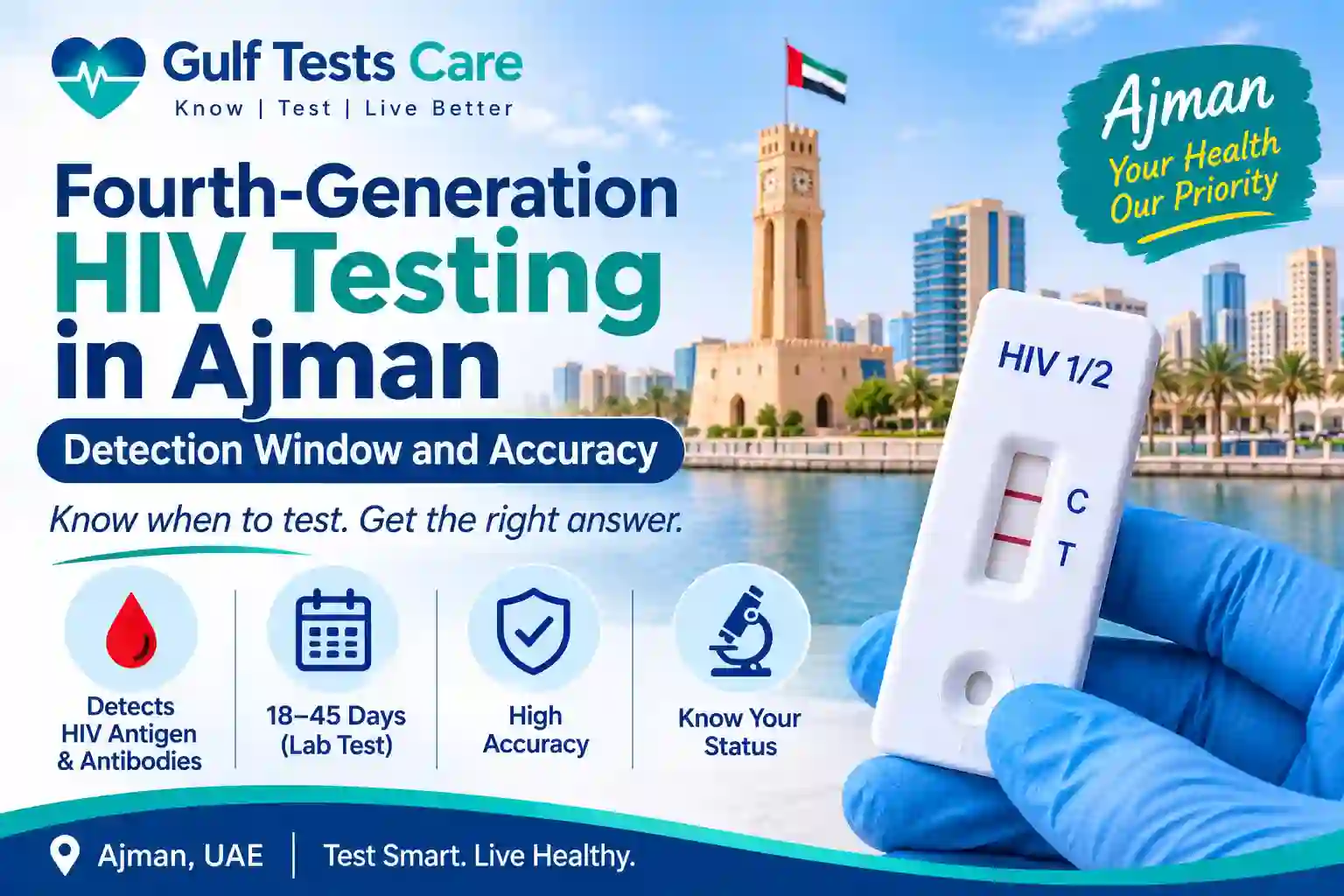
Understanding when an HIV test can detect infection is just as important as choosing the right test. Fourth-generation HIV tests are designed to detect two markers associated with HIV: the p24 antigen and antibodies produced by the immune system. By looking for both, these tests can identify many infections earlier than antibody-only tests.
If you are researching fourth-generation HIV testing in Ajman, this guide explains how these tests work, when to take one after a possible exposure, how to understand the results and what follow-up may be needed.
A fourth-generation HIV test is an antigen-antibody combination test. It looks for:
HIV-1 and HIV-2 antibodies: Proteins the immune system produces in response to HIV infection.
HIV-1 p24 antigen: A protein associated with the virus that can become detectable before the body has produced enough antibodies for some antibody-only tests to identify infection.
Detecting both antigen and antibodies can help identify HIV earlier than tests that look only for antibodies.
Fourth-generation testing is commonly performed in laboratories using a blood sample taken from a vein. Some rapid combination tests use a finger-prick blood sample, but their detection windows can differ. It is important to check the specific test's instructions rather than assuming every test labelled fourth-generation has the same performance.
After HIV enters the body, the virus begins multiplying. The p24 antigen may become detectable before the immune system produces enough antibodies to be identified by an antibody-only test.
A fourth-generation test looks for both markers in the same screening process.
The general process is:
A blood sample is collected according to the test's instructions.
The sample is processed using the appropriate laboratory or rapid-test method.
The test checks for the relevant HIV antigen and antibodies.
The result is interpreted according to the manufacturer's instructions and the applicable clinical testing algorithm.
The exact sample type, procedure and time required for results depend on the particular test.
The window period is the time between a possible HIV exposure and the point when a particular test can reliably detect infection.
No HIV test can detect infection immediately after exposure. Testing too early may produce a negative result even if infection has occurred.
According to the US Centers for Disease Control and Prevention (CDC), typical detection windows are:
| HIV test type | Typical detection window |
|---|---|
| Laboratory antigen/antibody test using blood from a vein | 18–45 days |
| Rapid antigen/antibody test using finger-prick blood | 18–90 days |
| Antibody test, including most self-tests | 23–90 days |
| Nucleic acid test (NAT) | 10–33 days |
These ranges are not interchangeable. A laboratory fourth-generation test using venous blood generally has a shorter detection window than a rapid finger-prick antigen/antibody test.
If your result is negative before the full window period has passed, you may need another test after the recommended period. Follow the advice of a qualified healthcare professional, particularly if you have used PEP or PrEP.
The right testing time depends on when the possible exposure occurred and which test you are using.
If the possible exposure was very recent: A test taken immediately may provide a baseline result, but it cannot rule out infection from that recent event. A healthcare professional can advise whether early testing or a different test, such as a NAT, is appropriate.
If 18–45 days have passed: A laboratory fourth-generation antigen/antibody test using blood from a vein may be able to detect HIV during this period. A negative result before day 45 may still require follow-up.
If 45 days or more have passed: A negative laboratory antigen/antibody result may be conclusive for that exposure under the relevant testing guidance, provided there have been no further exposures and no circumstances that alter the testing schedule.
If you used a rapid finger-prick test: Do not automatically apply the laboratory 45-day window. Rapid antigen/antibody tests using finger-prick blood may have a window of up to 90 days.
Always check the instructions for the specific test and follow clinical advice about repeat testing.
Fourth-generation HIV tests are widely used because they look for both p24 antigen and HIV antibodies. However, no test is equally reliable at every point after exposure.
Accuracy depends on several factors:
The number of days since possible exposure.
Whether the test is a laboratory-based or rapid test.
The type of sample used.
Whether the test was performed and interpreted correctly.
Whether medication such as PEP or PrEP may affect the testing schedule.
A negative result obtained during the window period does not necessarily rule out HIV. A reactive screening result also does not, by itself, establish an HIV diagnosis.
For these reasons, it is important to select the appropriate test and follow the recommended testing schedule.
People comparing HIV testing options in Ajman may encounter both laboratory tests and rapid tests. They are not automatically interchangeable.
| Feature | Laboratory fourth-generation test | Rapid HIV test |
|---|---|---|
| Sample | Usually blood from a vein | Depends on the test; may use finger-prick blood or oral fluid |
| Markers detected | Antigen and antibodies for a laboratory combination test | Depends on the specific product |
| Typical detection window | 18–45 days for a laboratory antigen/antibody test | Varies; 18–90 days for a rapid antigen/antibody finger-prick test |
| Result time | May take several days | Often available much sooner |
| Intended use | Laboratory testing | Depends on manufacturer instructions; some are for professional use and some are designed for self-testing |
Before choosing a rapid test, check whether it is an antigen/antibody combination test or an antibody-only test. Also confirm whether the manufacturer permits self-testing. A rapid test intended for professional use should not automatically be treated as a home self-test.
If you are comparing HIV test kits, consider the following points before making a decision:
1. Check the test generation and markers
Confirm whether the test detects HIV antibodies only or both antigen and antibodies. The product description and manufacturer instructions should clearly identify what the test is designed to detect.
2. Confirm the sample type
Some tests require venous blood, while others use finger-prick blood or another specified sample. Use only the sample type stated in the instructions.
3. Check the intended use
A product may be designed for laboratory use, professional rapid testing or self-testing. These categories should not be assumed to be interchangeable.
4. Review the instructions
Check storage conditions, expiry date, required procedure, result-reading time and interpretation guidance.
5. Understand the window period
Choose a testing schedule based on the time since possible exposure and the specific test's detection window. If you are unsure, ask a healthcare professional.
You can explore the available products and review their individual descriptions and instructions:
ELISA HIV Test Kit 4th Generation
HIV 1/2 Combo Test Cassette ELISA
Check each product's stated intended use and manufacturer instructions before selecting it. Do not assume that every product is suitable for home self-testing or that every rapid test has the same detection window.
Understanding the difference between a negative and a reactive result can help you decide what to do next.
A non-reactive result means the test did not detect the markers it was designed to identify at the time of testing.
However, if you tested during the window period, the result may not rule out infection. You may need to repeat the test after the full window period.
A reactive result means the screening test has detected a marker that requires further evaluation. It is not, by itself, a confirmed HIV diagnosis.
Follow-up testing through an appropriate healthcare service is necessary to establish the diagnosis.
An invalid result means the test did not produce a reliable reading. This may happen if the procedure was not followed correctly, the sample was insufficient or the test was damaged or expired.
Follow the manufacturer's instructions about repeating the test with a new, valid kit.
Do not wait for a test result if you may have had a significant HIV exposure within the past 72 hours.
Post-exposure prophylaxis (PEP) is medication that may help prevent HIV after a possible exposure. It should be started as soon as possible and no later than 72 hours after exposure. A healthcare professional must assess whether PEP is appropriate.
Testing is still important, but it does not replace urgent assessment for PEP. If you are within this time window, seek urgent medical care.
If you have taken PEP or are using PrEP, tell your healthcare professional. These medications can affect the recommended testing schedule and interpretation.
People in Ajman may have different reasons for considering HIV testing, including routine health screening, a recent possible exposure, a new relationship or a healthcare professional's recommendation.
Testing can provide useful information about your HIV status and help you make informed decisions about your health.
When choosing a test, focus on the type of test, its intended use, the sample required and the time since possible exposure. A test selected only because it is labelled “rapid” or “fourth-generation” may not be appropriate for every situation.
A fourth-generation antigen/antibody test can detect HIV earlier than an antibody-only test in many cases because it also looks for the p24 antigen. The actual detection window depends on the test method and sample type.
A laboratory fourth-generation test may not reliably detect every infection at 14 days. The CDC gives a typical detection window of 18–45 days for a laboratory antigen/antibody test using blood from a vein. A healthcare professional can advise whether an earlier NAT is appropriate.
A negative result from a laboratory antigen/antibody test using venous blood after its full 45-day window can generally rule out HIV from that exposure, provided there have been no subsequent exposures and no medication-related factors requiring a different schedule. Follow the advice of your healthcare professional.
No. Some rapid tests are intended for professional use, while others are specifically designed for self-testing. Always check the manufacturer's stated intended use and instructions.
Yes. HIV testing does not depend on having symptoms. A person can have HIV without noticeable symptoms, so testing is important when recommended or when an exposure may have occurred.
No. A reactive screening result needs follow-up testing according to the recommended diagnostic algorithm before an HIV diagnosis can be established.
A baseline test may be recommended, but it cannot rule out infection from a very recent exposure. If the exposure occurred within the past 72 hours, seek urgent medical assessment for PEP rather than waiting for a test.
Fourth-generation HIV testing is an important option for people who want to understand their HIV status. By detecting both the p24 antigen and HIV antibodies, laboratory-based fourth-generation tests can identify many infections earlier than antibody-only tests.
If you are looking for information about fourth-generation HIV testing in Ajman, remember that the correct testing time depends on the sample type and the specific test. Check the manufacturer's instructions, understand the window period and arrange follow-up testing when recommended.
For questions about a possible exposure, symptoms or test interpretation, consult a qualified healthcare professional.
Medical disclaimer: This article is for general educational purposes only. It does not replace professional medical advice, diagnosis or treatment. HIV test performance and intended use vary by product. Always follow the manufacturer's instructions and applicable clinical guidance.
Order your discreet test kit today with fast delivery across the UAE.
Shop Now