0
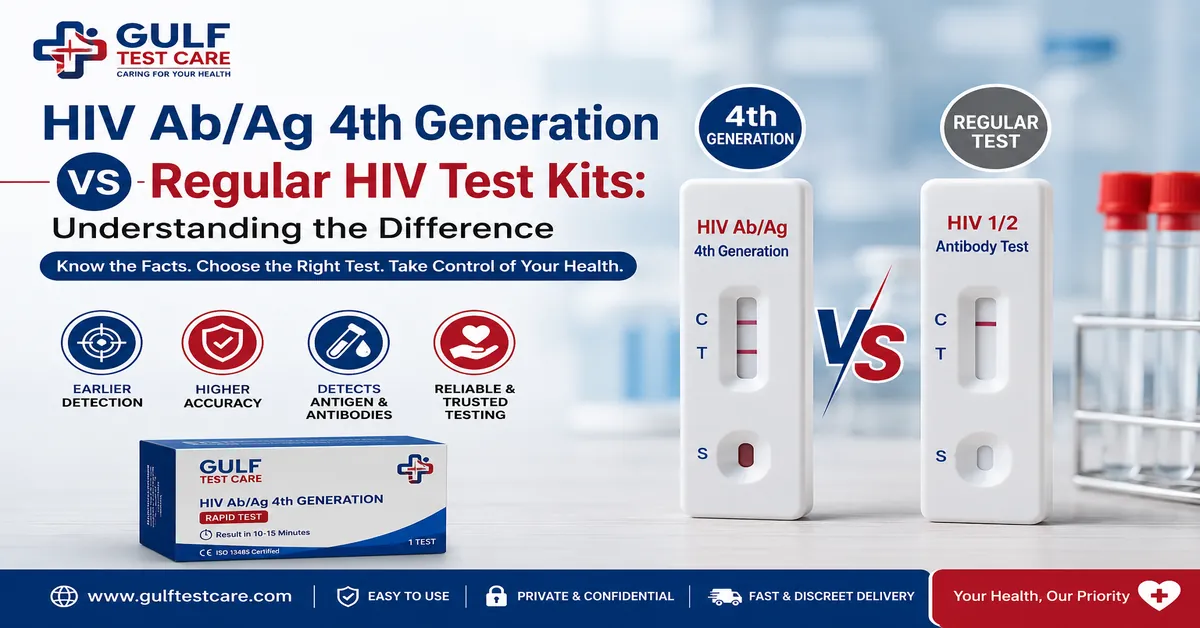
When people look for an HIV test kit, they may see many different names. Some kits say HIV Antibody Test, while others say HIV Ab/Ag 4th Generation Test. At first, these names can sound confusing.
So, what is the real difference?
The simple answer is that these tests look for different things in the blood. A regular antibody test looks mainly for the body's HIV antibodies. A 4th generation Ab/Ag test looks for both HIV antibodies and the p24 antigen.
This small difference can be important when testing after a recent possible exposure.
In this guide, we will explain the difference in very simple words and help you understand what each type of test does.
A regular HIV test kit usually refers to an antibody-based test.
Your body makes antibodies after it is exposed to HIV. An antibody test looks for these antibodies in a sample such as blood or oral fluid.
The important point is that the body needs time to make enough antibodies for a test to detect them. This time is called the window period.
According to the CDC, antibody tests can generally detect HIV about 23 to 90 days after infection, depending on the test and sample type.
Think of it like looking for footprints.
If someone has just walked across the ground, there may not be clear footprints yet. After some time, the footprints become easier to see.
In a similar way, the body needs time to make HIV antibodies. If testing is done too early, an antibody test may not detect them.
This does not mean the test is bad. It simply means that the timing of testing matters.
An HIV Ab/Ag 4th Generation test checks for two things:
HIV antibodies
HIV p24 antigen
The p24 antigen is a part of HIV that can appear earlier than antibodies. Because of this, an antigen/antibody test can detect HIV earlier than an antibody-only test in many situations.
That is why 4th generation testing is often used when earlier detection is important.
For example, a laboratory antigen/antibody test using blood from a vein can generally detect HIV about 18 to 45 days after exposure, although the exact window depends on the test and the person.
The easiest way to understand the difference is to look at what each test searches for.
| Feature | Regular Antibody Test | HIV Ab/Ag 4th Generation |
|---|---|---|
| Looks for HIV antibodies | Yes | Yes |
| Looks for p24 antigen | No | Yes |
| Can help detect earlier infection | Later | Earlier in many cases |
| Window period | Depends on test | Depends on test and sample |
| Follow-up may be needed for a reactive result | Yes | Yes |
The 4th generation test does not mean that every test will detect HIV immediately. No HIV test can detect infection straight after exposure. The window period still matters.
The p24 antigen is one of the main reasons 4th generation tests can be useful during early infection.
After HIV enters the body, viral material can appear before the body has produced enough antibodies. The p24 antigen may be detectable during this early stage.
Later, antibodies develop and can be detected by the antibody part of the test.
So, a 4th generation test is designed to look at both stages: the antigen and the antibodies.
That gives the test two things to look for instead of only one.
No test should be described as 100% accurate in every situation.
Test performance depends on the specific product, sample, testing method, timing, and whether the instructions were followed correctly.
A negative result taken too soon after a possible exposure may not rule out HIV because the test may still be inside its window period. HIV.gov also advises people to consider the window period of the specific test and repeat testing when appropriate.
A reactive or positive screening result also needs follow-up testing to determine whether HIV infection is actually present.
Not every 4th generation test is the same.
Some antigen/antibody tests are designed for laboratory use, while rapid combination tests can be used at the point of care. The sample type can also make a difference.
For example, CDC information notes that laboratory antigen/antibody testing using blood from a vein can detect infection earlier than some finger-prick antigen/antibody tests.
This is why it is always important to read the instructions that come with the exact test kit you are using.
Before using any HIV test kit, check:
What type of test it is
What sample is required
How the sample should be collected
How long you should wait before reading the result
The stated window period
What to do if the result is reactive
What to do if the test is invalid
Small mistakes can affect the testing process.
If you are comparing different HIV test kits, first understand what you need.
If you are looking specifically for an HIV Ab/Ag 4th Generation rapid test, you can view the HIV Ab/Ag 4th Generation Rapid Test from Gulf Test Care.
You can also visit the Gulf Test Care website to learn more about available testing products.
For people who want to see different options, the Gulf Test Care All Products page provides a wider selection of test kits.
Gulf Test Care also lists an HIV 1/2 Combo Test Cassette for customers looking for another HIV testing option.
There is no single answer for everyone.
A regular antibody test can be useful, but it mainly depends on the development of antibodies. A 4th generation Ab/Ag test checks for both antibodies and p24 antigen, so it may detect infection earlier.
If you recently had a possible exposure, timing is very important. A healthcare professional can help you choose the right test and explain when you should test or test again.
Remember, a test result should always be understood according to the instructions and window period for that particular test.
The difference between a regular HIV antibody test and an HIV Ab/Ag 4th Generation test is actually quite simple.
A regular antibody test looks for HIV antibodies. A 4th generation test looks for HIV antibodies plus the p24 antigen.
Because the p24 antigen can appear earlier than antibodies, 4th generation testing can help with earlier detection. However, no test works immediately after exposure, and the correct testing window is important.
If you are comparing HIV test kits, take a few minutes to read the product information carefully. Knowing what a test detects, what sample it uses, and when it can be used can help you make a more informed choice.
Important: This article is for general educational information only. A reactive HIV screening result should be followed by appropriate confirmatory testing with a qualified healthcare professional. If you believe you have had a recent possible exposure, speak with a healthcare professional about the right test and timing.
Order your discreet test kit today with fast delivery across the UAE.
Shop Now